LWS Pune

LWS Pune – Admissions Open for NDA (1-Year, 2-Year), CDS, AFCAT, CAPF, SPI & SSB | Expert Faculty, Hostel Facility, Physical Training – Enroll Now!

Blogs

Blogs

How to Prepare for NDA 2026 with Class 12th | Expert NDA Coaching in Pune by LWS (LWS)

Preparing for NDA 2026 while managing Class 12 board studies may seem challenging, but with the right strategy, it can become one of the smartest decisions of your academic life. If your dream is to join the Indian Army, Navy, or Air Force, then starting your NDA preparation alongside Class 12th gives you a strong advantage over other candidates. At LWS (LWS), we emphasize that students who begin early not only perform better in the NDA written exam but also build confidence for the SSB interview, physical fitness tests, and overall personality development essential for a successful defence career. In this comprehensive guide, we will outline detailed steps on how to prepare for NDA 2026 with Class 12th, including the syllabus breakdown, effective timetable, tailored study plan, recommended books, and expert tips tailored specifically for defence aspirants in Pune, Maharashtra. Why Class 12 is the Best Time to Start NDA 2026 Preparation Many aspirants postpone NDA preparation until after their board exams, which often leads to unnecessary last-minute stress. However, Class 12 is actually the ideal time to kick-start your NDA journey because: Mathematics fundamentals are active: Your Class 11 and 12 syllabus covers critical maths topics that align directly with the NDA mathematics paper. Subjects like Physics, Chemistry, and English overlap: The general ability test (GAT) syllabus intersects with your Class 12 syllabus, making simultaneous preparation manageable. Adequate time for revision and mock tests: Starting early means you have months to hone problem-solving speed and accuracy through repeated practice. Build confidence and exam speed: Early preparation helps reduce exam anxiety and sharpens your ability to tackle questions quickly. Balance board exams, NDA preparation, and physical fitness: A well-planned schedule can harmonize all these elements efficiently. Early preparation transforms Class 12 into an asset rather than a hurdle, giving you a competitive edge and smoothing your path towards cracking NDA 2026. Can Class 12 Students Apply for NDA 2026? Yes, Class 12 students currently studying or appearing for their final exams are eligible to apply for NDA 2026, provided they meet the prescribed eligibility criteria by UPSC. This makes Class 12 students prime candidates for NDA batches and provides a great opportunity to launch a defence career right away. Basic NDA Eligibility Criteria for 2026 You must have passed Class 12 or be appearing for the exam. For the Indian Army wing, candidates from any academic stream are eligible. For Air Force and Navy wings, candidates must have studied Physics and Mathematics in Class 12. Applicants must meet the prescribed age limit and physical/medical fitness standards mentioned in the official UPSC NDA notification. If you are currently in Class 12, now is the perfect time to prepare and apply for NDA 2026. Understand the NDA 2026 Exam Pattern First Before you begin your preparations, it is crucial to familiarize yourself with the NDA exam structure and marks distribution. This insight will help you allocate your time and effort effectively. NDA Written Exam Pattern Mathematics Paper: Total Marks – 300; Number of Questions – 120; Duration – 2.5 hours. General Ability Test (GAT): Total Marks – 600; Number of Questions – 150; Duration – 2.5 hours. The GAT covers a wide range of subjects: English Language and Comprehension General Knowledge covering: Physics Chemistry Biology History Geography Current Affairs and General Awareness The total written examination carries 900 marks. Candidates who qualify are then called for the Services Selection Board (SSB) interview, which itself carries another 900 marks. This stage tests your physical fitness, personality traits, leadership qualities, and communication skills — all essential for a successful defence career. How to Prepare for NDA 2026 with Class 12th – Step-by-Step Strategy Here’s a proven preparation roadmap for Class 12 students aspiring to crack NDA 2026, curated by LWS (LWS Pune) experts. 1. Create a Balanced Study Plan for Boards + NDA Preparation Many students worry about managing board exams along with NDA preparation. The key is to design a balanced, consistent study routine that gives adequate attention to both academics and NDA syllabus. Suggested Daily Study Routine: 2 hours for NDA Mathematics focusing on solving problems and understanding concepts. 1.5 hours for GAT subjects including English and General Knowledge. 2 to 3 hours for regular Class 12 board subjects to maintain strong academic performance. 30 minutes for daily Current Affairs reading and making notes. 30 to 45 minutes dedicated to physical fitness exercises. This plan ensures steady progress without overwhelming your daily schedule. 2. Focus Strongly on NDA Mathematics Mathematics is often the make-or-break section of the NDA written exam. Many candidates lose crucial marks due to insufficient practice or avoiding complex chapters. For Class 12 students, especially those taking Physics, Chemistry, and Maths (PCM), preparing for NDA Maths becomes much more manageable due to overlapping content. Important NDA Maths Topics: Algebra including quadratic equations and complex numbers Trigonometry and its applications Matrices and Determinants Analytical Geometry of two and three dimensions Differential and Integral Calculus Vector Algebra Statistics and Probability NDA Mathematics Preparation Tips: Practice problems daily to develop problem-solving speed and accuracy. Learn short methods and formulae for quicker calculations. Regularly attempt previous year questions to understand exam pattern. Take topic-wise mock tests to identify weak areas. 3. Prepare Smartly for the General Ability Test (GAT) With 600 marks, the GAT portion plays a pivotal role in NDA success. Ignoring it can be fatal to your selection chances. GAT Preparation Strategy: A. English Section Focus on grammar fundamentals, sentence improvement, error spotting Enhance vocabulary through reading and word lists Improve comprehension skills by practicing passages B. General Knowledge Section Strengthen basics of Physics, Chemistry, and Biology as per Class 11 and 12 NCERTs Review Indian History, Geography, and Political Science concepts Stay updated with Current Affairs through newspapers, monthly magazines, and online resources Best Preparation Tips: Use NCERT books as your foundation, prepare short notes for quick revision, solve daily MCQs, and regularly attempt full-length GAT mock tests to build confidence and speed. 4. Use

Blogs

CDS Previous Year Paper Analysis 2026: Complete Subject-Wise Breakdown for Effective Preparation

Preparing for the Combined Defence Services (CDS) exam without a thorough CDS previous year paper analysis is like heading into battle without a solid strategy, especially for defence aspirants in Pune and Maharashtra aiming for a successful defence career. To crack this prestigious exam, it is crucial to understand exam patterns, topic trends, and difficulty levels through careful study and analysis of past question papers. At LWS (LWS), we emphasize that patterns repeat, topics resurface, and strategic preparation based on previous years’ papers is fundamental to achieving success in CDS. Why CDS Previous Year Paper Analysis Is Important Many candidates collect previous CDS papers but miss out on the critical step of analyzing them for insights. This is a missed opportunity. A detailed CDS previous year paper analysis allows aspirants to: Understand the structure and real exam pattern of CDS Identify frequently asked questions and important topics Gauge the difficulty level and adjust preparation intensity Improve time management strategies during the exam Spot weaker sections requiring additional focus Create a smarter, targeted study plan Rather than preparing randomly or broadly, analyzing previous papers helps focus on what matters most, elevating your chances to secure a coveted officer entry through CDS. CDS Exam Pattern Overview Before diving deep into subject-wise analysis, let’s quickly recap the CDS exam pattern as faced by defence aspirants applying to prestigious academies in India, including aspirants from Pune. IMA, INA, and AFA: Candidates appear for three papers — English (100 marks), General Knowledge (100 marks), and Elementary Mathematics (100 marks). Each paper is 2 hours long, totaling 300 marks. OTA: Candidates write two papers — English (100 marks) and General Knowledge (100 marks) with a duration of 2 hours each, totaling 200 marks. Hence, if your aim is OTA, Maths is not part of your preparation syllabus, whereas for IMA, INA, or AFA aspirants, Mathematics holds significant importance. CDS Previous Year Paper Difficulty Level: Overall Analysis Based on trends observed in recent CDS exams, the overall difficulty level for each subject is: English: Easy to Moderate General Knowledge: Moderate to Difficult Elementary Mathematics: Moderate The greatest challenge lies not just in the complexity of questions but in balancing accuracy, speed, and smart question selection. Many candidates from Pune and other regions lose marks because they approach the paper without a structured strategy — a mistake you can avoid with proper CDS previous year paper analysis guidance. CDS English Previous Year Paper Analysis The English section in CDS is considered highly scoring if your basics—grammar and vocabulary—are strong. From our analysis at LWS, we find this paper primarily tests: Grammar rules and sentence structure Vocabulary knowledge and usage Reading comprehension and inference skills Frequently Asked Topics in CDS English Spotting errors in sentences Synonyms and antonyms Fill in the blanks Sentence improvement tasks Ordering of words or sentences Idioms and phrases Comprehension passages and cloze tests One-word substitutions Active and passive voice Direct and indirect speech Common Mistakes in English Section Ignoring fundamental grammar rules Memorizing vocabulary without proper context or usage Neglecting enough practice through mock papers Spending excessive time on complex comprehension passages Smart Preparation Tips for English Read English newspapers daily to build vocabulary and comprehension skills. Practice grammar questions consistently to strengthen your foundation. Learn 10–15 new vocabulary words each day with their usage. Solve previous year questions topic-wise to identify patterns and recurrent question types. Improve your speed with timed practice sessions. At LWS (LWS Pune), we encourage defence aspirants to treat English as a strategic scoring section, achievable with consistent effort and focused practice. CDS General Knowledge Previous Year Paper Analysis The General Knowledge (GK) paper is often seen as the most challenging part of the CDS exam. The wide syllabus covering diverse subjects can overwhelm aspirants, but a comprehensive analysis of previous papers reveals clear patterns. GK Topics Covered in CDS History (especially Modern Indian History and Freedom Movement) Geography (rivers, climate, soil, agriculture, minerals) Indian Polity (fundamental rights, parliament, constitutional bodies) Economics and General Science (basic physics, chemistry, biology) Current Affairs (national, international, defence-related updates) Defence-related topics (military commands, exercises, awards) Important Topics in GK Based on Paper Analysis Revolt of 1857 and important events of the freedom struggle Indian river systems and geographical mapping questions Fundamental rights and duties Basic science concepts relating to everyday applications Recent defence exercises and appointments in armed forces Why GK Can Be Difficult The GK section tests a combination of static knowledge and current affairs. Many aspirants mistakenly focus only on monthly current affairs PDFs, which is insufficient. Static GK topics form a large part of the paper, demanding consistent study over time. Effective GK Preparation Tips Build solid foundations in History, Geography, Polity, and Science. Regularly revise static GK along with current affairs. Focus on defence and military-related news to align with CDS context. Practice MCQs daily to improve recall and familiarity with question formats. Use previous year papers as a blueprint to identify frequently asked questions. At LWS Pune, we recommend daily short GK study sessions rather than cramming, helping aspirants across Maharashtra build confidence and consistency. CDS Elementary Mathematics Previous Year Paper Analysis For aspirants targeting IMA, INA, or AFA, mathematics often becomes a decisive factor. The syllabus is mostly based on Class 10 level with an emphasis on speed, accuracy, and conceptual clarity. Difficulty Level Generally, the Maths paper is of moderate difficulty but becomes challenging without a strong foundation and time management. Major Topics Frequently Asked Number System HCF and LCM Simplification Percentage, Profit, and Loss Ratio and Proportion, Average Time and Work, Time, Speed, and Distance Simple and Compound Interest Algebra (Linear and Quadratic Equations) Geometry and Mensuration Trigonometry, Heights and Distances Statistics High-Weightage Areas Arithmetic, Algebra, Geometry, and Trigonometry consistently receive maximum focus in CDS mathematics. Common Pitfalls Spending too long on a single question Avoiding maths practice due to fear or lack of confidence Neglecting regular formula revision Insufficient timed practice affecting speed Preparation Strategy Strengthen fundamentals from Class

Blogs

SSC Tech Entry 2026 Dates & Cut-Off | Complete Details for Defence Aspirants

The SSC Tech Entry 2026 notification has been officially released on the Join Indian Army website, marking an important opportunity for engineering graduates aspiring to become officers in the Indian Army. This blog post brings you complete details regarding SSC Tech Entry 2026 dates, cut-off marks, eligibility criteria, and the selection process with a special focus on helping defence aspirants in Pune and Maharashtra prepare effectively. Whether you are aiming to join through the Short Service Commission Technical entry or seeking expert defence career guidance, LWS (LWS) provides valuable insights and preparation strategies tailored for you. SSC Tech Entry 2026 Important Dates Understanding and adhering to the timelines is crucial for SSC Tech aspirants. As per the official notification by the Indian Army: Application Start Date: Already Started Last Date to Apply: Please verify the official Army recruitment portal for the exact deadline to avoid missing the opportunity. SSB Interview Dates: To be announced soon on the official website. Course Commencement: Scheduled for 2026 Candidates are highly encouraged to apply early to prevent last-minute technical glitches or network issues that could hamper timely submission of applications. Early application also allows aspirants to plan dedicated preparation time for SSB interviews and medical exams. SSC Tech Entry 2026 Cut-Off Marks Explained The release of the official SSC Tech cut-off marks for 2026 reflects the rising competition among defence candidates. To secure a strong chance of shortlisting for the SSB interview, candidates must meet or exceed the following cut-off percentages in their engineering graduation: Civil Engineering – 60% Computer Science / IT – 80% Electrical Engineering – 60% Electronics Engineering – 60% Mechanical Engineering – 60% Miscellaneous Engineering Streams – 60% Overall, an engineering aggregate cut-off of 67% has been established as a baseline standard, which means candidates need at least 67% marks in their engineering degree for a competitive profile. Factors Influencing SSC Tech Cut-Off It’s essential to understand that the cut-off is influenced by multiple dynamic factors, including: Number of Applicants: A higher volume of candidates increases competition and may raise cut-off marks. Branch-wise Vacancies: Different engineering disciplines may have varying vacancy numbers affecting cut-off demand. Difficulty Level of Applications: The academic and competitive quality of applicants as reflected in marks. Historical Trends: Previous years’ cut-offs help predict upcoming cut-off ranges but are subject to change. Overall Candidate Performance: Better aggregate performances tighten cut-offs. LWS (LWS) recommends aiming well above the cut-off to stay ahead and avoid last-minute surprises. SSC Tech Eligibility Criteria 2026 Before applying, it is important to confirm that you meet all eligibility criteria as stipulated by the Indian Army for SSC Tech 2026 entry: Educational Qualification: Candidates must hold a B.E. or B.Tech degree in a relevant engineering stream from a recognized university. Age Limit: Applicants must be between 20 and 27 years old at the time of application. Gender: Both male and female candidates are eligible to apply. Ensuring you fulfil these criteria is the first step towards a successful application and entry into the selection process. Selection Process of SSC Tech Entry The SSC Tech selection process is streamlined and focuses on academic performance combined with assessment of Officer Like Qualities (OLQs). The stages include: Shortlisting Based on Engineering Degree Cut-Off: Candidates meeting the aggregate cut-off are shortlisted. Service Selection Board (SSB) Interview: A comprehensive 5-day process that evaluates personality, leadership, psychological aptitude, and physical capabilities. Medical Examination: Ensures candidates meet the required medical fitness standards for active service. Final Merit List: Determined based on overall performance including academics and SSB assessments. Importantly, unlike NDA or CDS entries, SSC Tech does not involve a written exam, making the academic marks and SSB performance the sole determinants for final selection. LWS (LWS) Expert Advice for SSC Tech Aspirants At LWS (LWS), we understand the unique challenges SSC Tech candidates face and recommend the following preparation strategies: Maintain Above 70% Academic Aggregate: Aim higher than the official cut-off to establish a safe margin. Begin SSB Preparation Early: Strengthen the 5-day SSB interview skills, focusing particularly on Officer Like Qualities (OLQs). Practice Mock Interviews and Psychological Tests: Simulated sessions help familiarize candidates with the SSB process and improve confidence. Enhance Leadership and Communication Skills: These are critical attributes assessed during SSB interviews. Physical Fitness: Maintaining good physical condition is mandatory for successful medical clearance and interview performance. Why SSC Tech Entry Is a Golden Opportunity The SSC Tech entry provides a distinctive and direct path to becoming an officer in the Indian Army with multiple benefits: Direct Entry Without Written Exam: Selection is based on degree performance and SSB, reducing examination burdens. Prestigious Army Officer Position: Serve the nation while enjoying high respect and promising career growth. Attractive Salary and Benefits: Comprehensive pay packages, allowances, and post-retirement benefits. Leadership and Personal Development: Training at Indian Military Academy (IMA) develops officer-like qualities and leadership skills. Chance to Contribute to National Security: Join the elite defence forces and protect the sovereignty of India. Frequently Asked Questions (FAQs) About SSC Tech Entry 2026 Q: Can female candidates apply for SSC Tech Entry? A: Yes, both men and women are eligible to apply for SSC Tech Entry 2026. Q: Is there any written exam for SSC Tech selection? A: No, the SSC Tech selection process does not include a written exam. Selection is based on academic cut-off and SSB interview performance. Q: What is the age limit to apply for SSC Tech 2026? A: The age limit is between 20 and 27 years at the time of application. Q: How important is the engineering stream for SSC Tech eligibility? A: Candidates must have a B.E. or B.Tech degree in relevant engineering streams such as Civil, Computer Science/IT, Electrical, Electronics, Mechanical, or Miscellaneous Engineering. Conclusion: Secure Your Defence Career with SSC Tech 2026 Entry The announcement of SSC Tech Entry 2026 and the official cut-off at 67% clearly indicates intensified competition among defence aspirants. To stand out and achieve successful selection, rigorous academic preparation

Blogs

Best Academy for NDA, CDS & AFCAT: Why LWS (LWS) Is the Premier Defence Coaching in Pune

Preparing for defence entrance exams like NDA, CDS, and AFCAT requires far more than just hard work. It demands a strategic approach, disciplined study routines, and expert mentorship that understands the nuances of each exam and the overall selection process. Thousands of aspirants across Pune and Maharashtra dream of serving the nation through the Indian Armed Forces every year, but only a select few turn their ambition into reality. What sets successful candidates apart is often the choice of the right coaching institute that offers holistic preparation tailored to individual needs. For defence aspirants in Pune seeking comprehensive Defence Coaching in Pune, LWS (LWS) stands as the definitive choice for NDA Coaching in Pune, CDS Coaching in Pune, AFCAT Coaching in Pune, and specialized SSB Coaching in Pune. In this blog, we explore why LWS (LWS) is recognized as the best Defence Academy in Pune that equips candidates not only to crack written exams but also to excel in SSB Interviews and officer selection procedures. Why Choosing the Right Defence Coaching in Pune Matters Defence exams like NDA (National Defence Academy), CDS (Combined Defence Services), and AFCAT (Air Force Common Admission Test) are highly competitive with complex selection processes. Cracking these requires more than textbook knowledge — aspirants need: Structured Preparation: A well-planned syllabus covering all subjects with regular practice and revision. Expert Guidance: Experienced faculty who can explain concepts clearly and provide exam-oriented strategies. Physical and Personality Development: Physical fitness and personality traits are critical for SSB interviews and officer selection. SSB Interview Training: Specialized coaching on psychological tests, group tasks, and personal interviews. Offline coaching institutes create an immersive environment that enables real-time interactions with mentors and peer competition, which bolsters motivation and success rates. About LWS (LWS) – Leading Defence Coaching in Pune LWS (LWS) is a premier Defence Academy in Pune with an esteemed reputation for empowering aspirants to succeed in NDA, CDS, and AFCAT exams. Their mission to “train minds and build officers” reflects in a comprehensive curriculum that bridges academic excellence with leadership and character development. With a robust foundation in Defence Schooling for classes 9th to 12th and specialized NDA Foundation Course Pune, LWS creates a pipeline of well-prepared candidates ready for the challenges of defence entrance exams and SSB interviews. Key Features of LWS (LWS) for Defence Aspirants 1. Experienced Faculty and Mentorship At LWS, aspirants benefit from the guidance of highly qualified mentors, including retired defence personnel and SSB experts. Their deep understanding of the rigorous selection criteria helps students cultivate the mindset and Officer-Like Qualities (OLQs) essential for success. 2. Comprehensive Course Structure The courses at LWS cater precisely to the syllabus needs of NDA, CDS, and AFCAT exams: NDA Coaching: Mathematics, General Ability Test (GAT), English, and Current Affairs focused towards class 12 level. CDS Coaching: English, General Knowledge, and Elementary Mathematics suitable for graduates targeting IMA, INA, OTA, and AFA. AFCAT Coaching: Reasoning, Numerical Ability, General Awareness, and English designed for Air Force aspirants. Regular doubt clarification sessions and practice tests ensure conceptual clarity and exam readiness. 3. Dedicated SSB Interview Preparation Clearing the written exam is just the first step. LWS (LWS) offers specialized SSB Coaching in Pune that includes: Psychological Tests like Thematic Apperception Test (TAT), Word Association Test (WAT), and Situation Reaction Test (SRT) Group Discussions and Group Tasks outdoors to enhance team spirit and leadership Personal Interview training focusing on communication skills and confidence building This comprehensive preparation equips aspirants with the confidence and leadership traits required to excel in the SSB. 4. Regular Mock Tests and Performance Analysis LWS conducts frequent mock exams simulating the exact pattern and timing of NDA, CDS, and AFCAT. Detailed performance analysis helps students identify strengths and weak areas, enabling continuous improvement and strategic focus. 5. Personalized Attention through Small Batches Maintaining small batch sizes allows mentors to give personal attention to each aspirant. This focused mentorship enhances learning outcomes and builds a supportive environment essential for holistic development. Why LWS (LWS) Is the Best Choice for NDA Aspirants in Pune For NDA Preparation in Pune, LWS offers a proven pathway to success characterized by: A consistent track record of successful selections into the Indian Armed Forces A highly structured offline learning setup ensuring disciplined preparation Balanced focus on both written exam and SSB Interview rounds Dedicated training on creating and nurturing Officer-Like Qualities (OLQs) in every candidate Development of physical fitness routines and personality grooming aligned with defence requirements Such a holistic approach ensures that students are not only exam-ready but are also groomed to face career challenges as commissioned officers with confidence and integrity. NDA, CDS & AFCAT: Gateways to a Rewarding Defence Career NDA (National Defence Academy): Entry post-12th class for Army, Navy, and Air Force aspirants seeking to join the Indian Armed Forces at an early stage. CDS (Combined Defence Services): Competitive exam for graduates aspiring to join prestigious academies like Indian Military Academy (IMA), Indian Naval Academy (INA), Officers Training Academy (OTA), and Air Force Academy (AFA). AFCAT (Air Force Common Admission Test): Main gateway for entry into various branches of the Indian Air Force for both flying and ground duties. Each exam demands a tailored preparation strategy and expert mentorship to navigate through the written tests and rigorous service selection boards. LWS excels in providing this end-to-end preparation for Defence Aspirants in Pune and Maharashtra. Benefits of Choosing LWS (LWS) for Defence Coaching in Pune Expert Defence Career Guidance Pune: Personalized counsel to create a clear roadmap for defence aspirations. Wide Range of Courses: Covering NDA Foundation Course Pune, CDS Coaching Pune, AFCAT Preparation, SSB Interview Coaching, and Defence Schooling for younger aspirants. State-of-the-Art Learning Environment: Interactive classrooms and practical training modules. Holistic Personality Development: Emphasis on communication, leadership, and physical fitness to meet defence standards. Local Focus: Designed to cater specifically to Defence Aspirants Pune and Maharashtra, understanding local needs and exam trends. Frequently

Blogs

Common Mistakes Students Make in Defence Exam Preparation | Defence Coaching in Pune

Preparing for defence exams is a dream journey for thousands of young aspirants who want to serve the nation through the armed forces. However, many students fail not because they lack potential, but because they make avoidable mistakes during their preparation. This comprehensive guide highlights the common mistakes defence aspirants often make and provides actionable solutions to help you prepare effectively. Whether you are enrolled in NDA Coaching in Pune, CDS Coaching in Pune, AFCAT Coaching in Pune, or preparing for the SSB Interview, understanding and avoiding these pitfalls can significantly enhance your chances of success. 1. Not Understanding the Exam Pattern and Syllabus One of the most critical mistakes in defence exam preparation is starting without fully grasping the exam pattern and syllabus. Defence entrance exams such as NDA, CDS, AFCAT, and the SSB Interview have distinct formats, sections, and marking schemes. For instance, NDA preparation requires a clear understanding of Mathematics, General Ability Test (GAT), and the SSB selection process, while AFCAT focuses on subjects specific to the Indian Air Force career path. Why This Is a Problem: Wastes valuable time studying irrelevant topics not included in the syllabus Leads to incomplete coverage of important subjects Creates confusion and stress during revision phases Solution: Download the latest syllabus from official defence exam websites Study previous year question papers specific to your exam category Understand section-wise weightage to prioritize preparation effectively This foundational knowledge is why candidates join professional NDA Coaching in Pune like LWS (LWS), where expert mentors provide clear guidance on exam patterns and syllabus focus areas. 2. Lack of Proper Study Plan Many aspirants dive into preparation without a systematic study timetable. Random study patterns or focusing only on favourite subjects hinder comprehensive preparation. Ignoring weak areas and skipping revision are common issues that reduce exam readiness. Common Issues: Studying only favourite or easy subjects, neglecting difficult ones Lack of a fixed revision schedule causing forgotten concepts Ignoring physical fitness and overall well-being Solution: Create a structured study plan incorporating daily targets for each subject Schedule weekly mock tests and revision sessions Include fitness training as part of your daily routine LWS (LWS) offers personalized study plans tailored to each defence aspirant’s strengths and weaknesses, ensuring balanced preparation for written exams and physical fitness. 3. Ignoring Physical Fitness Preparation Defence selection is about both mental and physical excellence. Aspirants often overlook physical fitness, focusing solely on academics. However, physical standards such as running, push-ups, and endurance tests are vital for NDA fitness preparation and SSB physical standards. Common Mistakes: Neglecting daily running, strength exercises, and stamina building Ignoring medical fitness and health checkups Lack of balanced diet and proper sleep affecting performance Solution: Start physical training from day one: run 2 to 3 km daily Incorporate strength and flexibility exercises Maintain a balanced diet and healthy sleep routine Consult fitness experts for customized workout plans LWS (LWS) in Pune integrates physical fitness coaching into their defence education programs ensuring candidates are physically and mentally prepared for officer entry schemes. 4. Not Practicing Mock Tests Regularly Mock tests are crucial to simulate real exam conditions and improve time management, speed, and accuracy. Many students avoid mock tests due to fear of low scores or lack of discipline. Common Pitfalls: Fear of scoring less leading to avoidance No proper analysis of mistakes post-test Inconsistent attempt of mock exams reducing confidence Solution: Attempt weekly mock tests to build exam temperament Analyze errors thoroughly to avoid repeating them Focus on improving speed without compromising accuracy At LWS Pune, mock tests are an integral part of the coaching strategy, helping defence aspirants stay on track toward success in NDA, CDS, AFCAT, and SSB exams. 5. Poor Time Management During Preparation Time management during preparation is critical to cover the vast syllabus of defence entrance exams efficiently. Many aspirants spend excessive time on one subject or chapter while neglecting others. Consequences: Incomplete syllabus coverage Weak performance in balanced exams with multiple sections Increased stress and panic before exams Solution: Follow the 50-10 Rule: Study for 50 minutes, then take a 10-minute break Divide study sessions across subjects based on difficulty and importance Use planners or digital apps for scheduling and tracking progress LWS (LWS) encourages disciplined time management to avoid burnout and ensure comprehensive exam readiness. 6. Neglecting Current Affairs and General Knowledge Defence exams and interviews often emphasize General Awareness, especially current affairs related to national security, defence technology, and international relations. Common Mistake: Focusing only on Mathematics and English, ignoring daily current affairs preparation. Solution: Read newspapers like “The Hindu” or “The Indian Express” daily Follow defence and strategic news updates from credible sources Maintain categorized notes on important current affairs topics LWS (LWS) integrates current affairs coaching into their Defence Foundation Courses Pune, ensuring aspirants stay updated and confident during exams and interviews. 7. Underestimating SSB Interview Preparation Many candidates think clearing the written exam is the only challenge. However, the SSB Interview is a comprehensive assessment of an aspirant’s personality, leadership skills, and decision-making capabilities. SSB Tests Include: Personality Assessment Leadership Tasks and Group Discussions Psychology Tests Personal Interviews Officer Like Qualities (OLQs) assessment Solution: Begin SSB preparation early to develop communication and leadership skills Participate in group tasks and mock interviews regularly Practice psychology test evaluations with experts LWS (LWS) offers specialized SSB Coaching in Pune, focusing on all aspects of the selection process to build confidence and officer-like qualities. 8. Following Too Many Study Resources Using multiple books and switching between various coaching materials is a common mistake that causes confusion and scattered focus. Issue: Students keep jumping between different books and online sources without mastering any. Solution: Stick to a limited number of trusted books relevant to your exam Follow guidance and notes from a single reputable coaching source such as LWS (LWS) Focus on consistent revision of selected materials This focused approach enhances retention, encourages depth over breadth, and

Blogs

How to Start Preparation for NDA/CDS/AFCAT from Scratch – Complete Beginner’s Guide by LWS (LWS)

Preparing for defence entrance exams like NDA, CDS, and AFCAT from scratch can feel overwhelming for many aspirants. Thousands dream of joining the Indian Armed Forces to serve the nation, but success demands the right strategy, dedicated discipline, and expert guidance. If you are wondering how to start NDA/CDS/AFCAT preparation from zero, this detailed beginner’s guide by LWS (LWS) – a leading Defence Coaching institute in Pune – will help you build a solid foundation and chart your path to becoming an officer. Joining the defence forces not only brings immense respect and prestige in society but also offers job security, a disciplined lifestyle full of adventure, excellent salary packages, and tremendous leadership opportunities. Whether your goal is to join the Army, Navy, or Air Force, cracking NDA, CDS, or AFCAT remains the most popular and accessible route. LWS (LWS Pune) specializes in NDA Coaching in Pune, CDS Coaching, AFCAT Coaching, and SSB Coaching in Pune, designed to equip defence aspirants with everything needed for success. Why Choose NDA/CDS/AFCAT as a Career? Choosing the defence career path through NDA, CDS, or AFCAT opens multiple avenues of growth and national service. The benefits include: Respect and Prestige – Defence officers are highly regarded in Indian society and are role models for discipline and patriotism. Job Security and Excellent Salary – Government defence jobs provide stable employment with attractive pay and benefits. Adventure and Discipline – Life in the Armed Forces entails dynamic challenges, strong discipline, and physical fitness. Leadership Development – Officers develop vital leadership and decision-making skills relevant both in service and beyond. Serve the Nation – Defence service is the highest form of national contribution, protecting the country’s sovereignty and interests. At LWS (LWS Pune), our defence coaching programs emphasize all these aspects along with comprehensive exam preparation to help students realize their dreams. Understanding the Difference Between NDA, CDS, and AFCAT Before beginning your defence exam preparation, it is crucial to understand the differences among these three key exams to choose the best fit for your profile and career ambitions. NDA (National Defence Academy) Eligibility: For students who have completed Class 12 (10+2) examination. Age Limit: 16.5 to 19.5 years. Conducted by: Union Public Service Commission (UPSC). Purpose: Entry into the Army, Navy, and Air Force through a combined training academy. CDS (Combined Defence Services) Eligibility: Graduates from recognized universities. Age Limit: Typically 19 to 25 years, varying with academy and branch. Conducted by: UPSC. Purpose: Entry into Indian Military Academy (IMA), Naval Academy (INA), Air Force Academy (AFA), and Officers Training Academy (OTA). AFCAT (Air Force Common Admission Test) Eligibility: Graduates interested specifically in entry to the Indian Air Force. Age Limit: Based on branch and entry scheme. Conducted by: Indian Air Force. Purpose: To select officers for Flying, Technical, and Ground Duty Branches of the Air Force. Each exam follows a distinct syllabus, exam pattern, and selection process, and so your preparation strategy needs to be aligned accordingly. Step-by-Step Guide to Start NDA/CDS/AFCAT Preparation from Scratch 1. Understand the Complete Exam Pattern & Syllabus The very first step in your preparation journey should be familiarizing yourself thoroughly with the detailed syllabus and exam format of the exam you wish to prepare for. This helps in targeted study and efficient time allocation. NDA Syllabus covers: Mathematics – Algebra, Trigonometry, Geometry, Statistics, etc. General Ability Test – English and General Knowledge including Science, History, Geography, and Current Affairs. CDS Syllabus includes: English Language and Comprehension General Knowledge Elementary Mathematics AFCAT Syllabus focuses on: General Awareness including current affairs and defence knowledge Verbal Ability in English Numerical Ability Reasoning and Military Aptitude Understanding the syllabus helps in identifying your strong and weak areas and planning your study material accordingly. 2. Build Strong Basics First Starting preparation from scratch means you need to focus on strengthening your fundamentals. LWS (LWS Pune) recommends focusing on NCERT books as the backbone of your preparation, especially for NDA aspirants coming after Class 12. Mathematics: NCERT books from Classes 6 to 12 provide comprehensive coverage of concepts required for NDA, CDS, and AFCAT. Science and General Knowledge: Basic NCERT Science from Classes 6 to 10 Social Studies: History, Geography, and Polity NCERT textbooks help build base general awareness. Strong basics make advanced topics and questions approachable and boost confidence. 3. Create a Study Plan Consistency is the key to long-term success in defence entrance exams. Instead of studying in irregular bursts, maintain a disciplined routine with a well-structured plan. Example Beginner Study Plan: 2 hours – Mathematics practice and concept building 1 hour – English improvement (grammar, comprehension, vocabulary) 1 hour – General Knowledge and Current Affairs 30 minutes – Revision of previously learned topics 30 minutes – Mock test practice focusing on exam pattern and time management This systematic approach ensures balanced preparation of all essential sections. 4. Improve English & Communication Skills English language proficiency is crucial for NDA, CDS, AFCAT, and the subsequent SSB Interview. At LWS (LWS Pune), we emphasize communication skills as a core part of our Defence Coaching in Pune. Daily reading of newspapers to enhance vocabulary and comprehension. Learning 10 new English words daily with their meanings and usage. Practicing grammar exercises to avoid common mistakes. Writing short essays and paragraphs to improve expression and writing speed. Engaging in spoken English conversations and discussions for better fluency. 5. Practice Mathematics Daily Mathematics is often the deciding section in NDA and CDS exams. Consistent daily practice helps in mastering complex problems and saves time during exams. Key topics to focus on include: Algebra – Factorization, Quadratic Equations Trigonometry – Heights, Distances, Identities Geometry – Lines, Angles, Circles, Triangles Mensuration – Surface Areas, Volumes Statistics – Data Interpretation Arithmetic – Ratio, Proportion, Percentages, Profit & Loss 6. Stay Updated with Current Affairs General Knowledge forms a major part of the NDA, CDS, and AFCAT exams, especially covering Defence News, Government Policies, Science & Technology, and International Affairs. Regular

Blogs

150 Days Planner for NDA Preparation – LWS (LWS) Strategy to Crack the Exam

Preparing for the National Defence Academy (NDA) exam demands discipline, consistency, and a meticulously crafted plan. A 150 days planner for NDA preparation offers aspirants an ideal balance to build strong concepts, enhance problem-solving skills, and revise comprehensively. This strategic timeframe, designed by LWS (LWS), caters to defence aspirants aiming for success in one of India’s most prestigious defence entrance exams. Whether you are from Pune, Maharashtra, or any part of the country, this guide will help you ace the NDA exam while laying a solid foundation for your defence career. Why a 150-Day Plan is Perfect for NDA Preparation A 150-day preparation plan is the golden timeline that helps aspirants approach the NDA exam methodically with sufficient flexibility and depth. Here are the key reasons why this timeline works exceptionally well: Build Strong Fundamentals: It allows ample time to thoroughly understand the entire syllabus of Mathematics and General Ability Test (GAT). Regular Practice with Mock Tests: Frequent mock tests and sectional assessments help improve exam temperament and test-taking strategies. Multiple Revisions: You can revisit difficult topics several times to ensure retention and confidence. Balanced Speed and Accuracy: Time management skills improve gradually, allowing aspirants to solve more questions accurately within the exam duration. This duration is neither too brief to rush the preparation nor excessively long to lose focus, making it ideal for serious NDA aspirants committed to joining the armed forces. NDA Exam Overview Before diving into the 150-day planner, let’s revisit the NDA exam pattern to understand its two main sections and their weightage: Mathematics: 300 marks covering Algebra, Trigonometry, Calculus, Geometry, and related topics. General Ability Test (GAT): 600 marks divided into two subsections: English Language and Comprehension General Knowledge including Physics, Chemistry, History, Geography, and Current Affairs The exam demands proficiency in both quantitative aptitude and general proficiency, including a strong hold on English. Physical fitness and mental preparedness are also crucial for the subsequent SSB interview phase. Phase-wise 150 Days NDA Preparation Plan by LWS (LWS) Phase 1: Foundation Building (Day 1–50) This initial phase focuses on crystal-clear concept building and establishing a strong base in both Mathematics and General Ability subjects. Focus Areas: Mathematics: Algebra, Trigonometry, Calculus essentials, and Geometry fundamentals English: Basic grammar, vocabulary enhancement, and comprehension skills General Knowledge: Basic concepts in Physics and Chemistry Study Strategy: Dedicate 6 to 8 hours daily depending on your pace and schedule Invest about 3 hours on Mathematics fundamentals Spend 2 hours on General Ability subjects Allocate 1 hour for English language practice Tips: Develop the habit of daily newspaper reading to stay updated with current affairs and improve English comprehension. Create concise notes for formulas, grammar rules, and important concepts for quick revision. Prioritize depth over speed at this stage to ensure conceptual clarity. Phase 2: Practice & Strengthening (Day 51–100) Once the basics are sound, this phase concentrates on honing problem-solving skills and increasing speed without compromising accuracy. Focus Areas: Solve previous year NDA question papers to understand question patterns. Take sectional tests to identify strengths and weaknesses. Focus on weaker topics with targeted practice. Study Strategy: Increase practice sessions, especially timed quizzes to simulate exam conditions. Regularly revise notes from the first phase to keep concepts fresh. Maintain a weekly schedule: 5 days for study, 1 day for revision, and 1 day for mock tests. Tips: Analyze mistakes critically after every test to avoid repeat errors. Initially focus more on accuracy, then gradually improve speed. Build time management skills essential for the NDA exam’s strict timeline. Phase 3: Revision & Mock Tests (Day 101–150) This is the most crucial phase where your preparation is polished through rigorous revision and strategic mock tests to build exam confidence. Focus Areas: Comprehensive syllabus revision focusing on difficult and high-weightage topics. Attempt 2 to 3 full-length mock tests weekly under real exam conditions. Focus on speed enhancement and error elimination. Study Strategy: Daily revision of formulas, vocabulary, and key concepts. Regular mock test analysis for performance improvement. Eliminate distractions and avoid learning new topics to consolidate knowledge. Tips: Replicate exam hall environment during mock sessions to manage anxiety. Maintain a calm and confident attitude throughout preparation. Ensure physical and mental well-being to perform optimally on exam day. Daily Study Routine Example for NDA Aspirants Balancing different subjects throughout the day helps in consistent progress and keeps the preparation engaging. Morning: Dedicated Mathematics practice including problem-solving. Afternoon: Study General Ability topics such as Physics, Chemistry, and History. Evening: Focus on English language practice and current affairs update. Night: Revision of formulas, vocabulary, and analysis of mock tests. Key NDA Subjects to Prioritize While NDA syllabus is vast, giving priority to core areas enhances scoring potential. Mathematics: Algebra, Trigonometry, Coordinate Geometry, Calculus – fundamental for the first paper. General Ability Test: English grammar & comprehension, basics of Physics & Chemistry, History & Geography, and Current Affairs. Common Mistakes to Avoid During NDA Preparation Neglecting timely and regular revision which leads to weak retention. Not solving previous years’ question papers, missing important exam patterns. Skipping mock tests and not assessing exam readiness. Studying without a structured timetable causing loss of focus. Overloading preparation with too many reference books causing confusion and burnout. Pro Tips for NDA Aspirants from LWS (LWS) Stay consistent and disciplined in your daily study schedule; progress is a result of regular effort. Focus on conceptual clarity rather than rote memorization for long-term retention. Incorporate physical fitness routines important for cracking the subsequent SSB interview. Stay updated with current affairs daily through newspapers and reliable apps. Frequently Asked Questions (FAQs) About NDA Preparation Q1: Is 150 days enough to prepare for the NDA exam? Yes, a well-structured 150 days planner is sufficient to cover the syllabus, practice extensively, and revise if you commit daily focused study. Q2: How important are mock tests in NDA preparation? Mock tests are crucial as they build exam temperament, improve speed and accuracy, and help analyze your preparation gaps. Q3: Can I crack

Blogs

Best Academy for SSB Preparation: Why LWS (LWS) Stands Out for SSB Coaching in Pune

Preparing for the Services Selection Board (SSB) interview is a critical milestone for every defence aspirant aiming to join the Indian Armed Forces. The SSB interview assesses much more than academic knowledge; it evaluates a candidate’s personality, leadership potential, psychological aptitude, and communication skills. Therefore, selecting the right coaching institute for SSB preparation is imperative to maximize your chances of success. LWS (LWS), based in Pune, Maharashtra, has established itself as the best academy for SSB Coaching in Pune, providing comprehensive, result-driven training tailored to help aspirants excel in every phase of the SSB selection process. Understanding the Importance of SSB Coaching and Officer Like Qualities (OLQs) The SSB interview is a multi-stage selection procedure designed to identify potential officer candidates through various tests, including psychological assessments, group tasks, and personal interviews. Unlike conventional exams, the SSB process evaluates Officer Like Qualities (OLQs), such as effective communication, social adaptability, leadership, and decision-making skills. Many candidates falter not due to lack of intelligence but because of inadequate understanding of the SSB dynamics, test expectations, and appropriate behavioral responses. Structured coaching plays a pivotal role in familiarizing aspirants with the SSB pattern. Coaching institutes like LWS (LWS) offer expert guidance to: Understand the psychology behind various tests (TAT, WAT, SRT) Practice Group Testing Officer (GTO) tasks such as group discussions, outdoor leadership tasks, and teamwork exercises Develop confident and clear communication skills for the Personal Interview Receive personalized feedback to strengthen weak areas and build officer-like confidence Why Choose LWS (LWS) for SSB Coaching in Pune? 1. Expert Faculty with Defence Experience LWS (LWS) is renowned for its experienced faculty, including former defense personnel and SSB experts who bring invaluable real-life insights. Their first-hand knowledge of the Services Selection Board process helps aspirants grasp subtle nuances and expectations, enhancing their readiness and confidence. 2. Comprehensive and Structured SSB Training Program The academy offers a meticulously designed curriculum covering all vital components of the SSB interview: Screening Tests – OIR (Officer Intelligence Rating) & PPDT (Picture Perception and Description Test) Psychological Tests – TAT (Thematic Apperception Test), WAT (Word Association Test), SRT (Situation Reaction Test) Group Testing Officer (GTO) Tasks – Group discussions, group planning exercises, outdoor tasks, and physical fitness assessments Personal Interview Preparation – Mock interviews and confidence-building exercises This holistic approach ensures aspirants are competent, well-prepared, and mentally resilient at every stage of the selection process. 3. Emphasis on Personality Development Unlike generic coaching programs that focus merely on theoretical knowledge, LWS (LWS) prioritizes the complete personality development of candidates. Enhancing body language, effective communication, decision-making skills, and leadership abilities are integral parts of training. This focus equips aspirants with the officer-like qualities (OLQs) that are pivotal to success during SSB interviews. 4. Realistic Mock SSB Interviews and GTO Tasks Regular mock sessions replicate the actual SSB environment to help candidates manage stress, overcome nervousness, and perform confidently under pressure. LWS (LWS) uses these simulations to provide real-time situational experience, making aspirants comfortable and prepared for the real interview. 5. Personalized Feedback and Mentorship LWS (LWS) believes in individual attention. After every test and mock interview, aspirants receive detailed, constructive feedback highlighting strengths and areas that need improvement, creating a pathway for continuous growth and enhanced performance. 6. Consistent Track Record of Success The academy has built a reputation for producing highly recommended candidates who secure positions in the Indian Armed Forces. This success rate is a testament to the quality training and mentor support that LWS provides. How to Choose the Right SSB Coaching Institute: Insights from LWS (LWS) Choosing the right SSB coaching institute is crucial for your preparation journey. Here are strategic factors to consider: Faculty Credentials: Ensure trainers have defense backgrounds and SSB experience. Student Success Stories: Look for reviews and alumni recommendations. Course Structure: The institute should offer end-to-end training, including all psychological, physical, and interview preparation modules. Practical Training: Emphasis on mock tests and real-time group tasks is essential. Facilities and Support: Accessibility, study materials, and personal mentoring contribute to effective learning. Affordability: Compare fees keeping value and success rates in mind. LWS (LWS) in Pune meets all these criteria, making it the preferred choice for Defence Coaching in Pune and specialized SSB Coaching. Use Cases: How LWS (LWS) Empowers Defence Aspirants in Pune NDA Aspirants: Those preparing for NDA exams benefit from integrated NDA Foundation Courses that establish a strong base for clearing written exams and succeeding in SSB interviews in Pune. SSB Candidates: Focused SSB interview batches with psychological test coaching and GTO task training ensure holistic preparation to meet SSB standards. CDS and AFCAT Aspirants: Comprehensive coaching supports exam preparation alongside officer entry guidance, maximizing selection potential. Defence Schooling Students: LWS helps students from classes 9th to 12th with academic and defence-specific training, building early confidence and discipline for defence careers. Benefits of Opting for LWS (LWS) SSB Coaching in Pune Experienced mentors with defense and SSB backgrounds Structured, all-inclusive training modules covering all phases of SSB Development of Officer Like Qualities essential for success Realistic mock interviews and group task scenarios Personalized feedback and continuous progress tracking Proven high success rate in recommending candidates Strategic location in Pune, Maharashtra with easy accessibility Integrated Defence Career Guidance and counselling Frequently Asked Questions (FAQs) About SSB Coaching and Preparation 1. What makes SSB coaching essential for defence aspirants? SSB coaching is essential because it prepares candidates for the unique, multi-faceted selection process that tests personality, leadership, and psychological aptitude beyond written exams. Professional coaching guides candidates through each stage, making them familiar with test formats and expectations. 2. How does LWS (LWS) prepare candidates differently for SSB? LWS combines experienced trainers, structured course modules, personality development focus, and realistic mock tests to ensure comprehensive preparation, boosting confidence and improving performance during actual interviews. 3. Can I prepare for NDA written exams and SSB interviews simultaneously at Learn

Blogs

152 Days Left for CDS 2 2026: Your Complete CDS Coaching Preparation Strategy with LWS (LWS)

With only 152 days left for CDS 2 2026, every defence aspirant in Pune and Maharashtra must focus on a structured and effective preparation strategy. The Combined Defence Services (CDS) exam is a gateway to prestigious officer entry schemes in the Indian Armed Forces, including the Indian Military Academy (IMA), Indian Naval Academy (INA), Officers Training Academy (OTA), and Air Force Academy (AFA). Success in this competitive exam demands disciplined planning, consistent study, and expert guidance. LWS (LWS), a trusted Defence Coaching institute in Pune, offers an ideal preparation roadmap tailored for CDS aspirants to make these 152 days count. Why 152 Days is a Crucial Preparation Window for CDS 2 2026 Many aspirants feel overwhelmed looking at the limited days left before the exam. However, a well-planned approach transforms this time into an opportunity to build, strengthen, and refine knowledge systematically. Dividing these 152 days into focused phases maximizes learning and retention: Foundation Building (First 50 Days): Lay a strong conceptual base across the essential CDS subjects—English, General Knowledge (GK), and Mathematics. Strengthening & Practice (Next 50 Days): Hone your skills by solving previous year question papers and targeted practice on weak topics. Revision & Mock Tests (Final 52 Days): Emphasize thorough revision and simulate the exam environment through regular full-length mock tests coupled with detailed performance analysis. Subject-Wise Preparation Strategy for CDS 2 2026 English English is a subject that tests vocabulary, grammar, comprehension, and sentence structure. Aspirants should focus on: Learning and revising grammar rules regularly to avoid common mistakes. Building a strong vocabulary by reading newspapers, Defence news, and standard word-lists curated by LWS (LWS). Practicing comprehension passages and improving reading speed to enhance accuracy and time management. General Knowledge (GK) General Knowledge in CDS combines static GK and current affairs. A comprehensive approach includes: Studying Indian history, geography, polity, economics, and environmental science to cover static GK. Regularly updating yourself with national and international current affairs, especially defence-related events and government schemes. Maintaining concise notes and revising them periodically for memory retention. Mathematics Mathematics is often considered a high-scoring yet challenging section. Key strategies include: Developing clarity in fundamental concepts such as algebra, trigonometry, geometry, and arithmetic through targeted study sessions. Daily practice of problems to improve speed and accuracy. Revising formulas regularly to enhance quick problem solving during the exam. The Role of LWS (LWS) in Your CDS 2 2026 Preparation Journey Self-study is important, but expert mentorship and a systematic study plan drastically increase chances of success. LWS (LWS), recognized as a premier Defence Coaching institute in Pune, offers the following advantages: Structured Study Plan: LWS provides a clear and practical timeline to cover the entire CDS syllabus effectively within the remaining days. Expert Guidance: Experienced mentors at LWS break down complex topics, share exam strategies, and offer personalized doubt-clearance sessions. Regular Mock Tests: Simulated CDS exams replicate the actual environment, helping aspirants develop time management skills and build exam confidence. Performance Analysis: Detailed feedback from LWS helps identify strengths and weaknesses, enabling targeted improvements. SSB Interview Preparation: Since clearing the CDS written exam is just the first step, LWS provides comprehensive SSB Coaching in Pune focused on Officer Like Qualities (OLQs), GTO tasks, psychological tests, and personal interview preparation. Daily Routine and Study Tips for the Next 152 Days Consistency and balance are key to effective CDS exam preparation. Aspirants should aim to: Dedicate 6 to 8 hours daily for focused study sessions, dividing time judiciously among all three subjects. Practice at least one full-length mock test weekly initially, increasing frequency as the exam approaches. Regularly revise previous topics to ensure long-term retention of concepts. Maintain physical fitness alongside academics, as the CDS selection process values physical endurance and a healthy lifestyle. Common Mistakes to Avoid During CDS Preparation Ignoring Revision: Frequent revision consolidates your learning and boosts confidence. Skipping Mock Tests: Lack of practice exams may lead to time management issues on the actual day. Focusing Only on Strong Subjects: Balanced preparation across all subjects improves overall scoring potential. Lack of Consistency: Irregular study habits delay progress and increase stress closer to the exam. Overloading without a Plan: Unplanned study leads to confusion and ineffective learning. Benefits of Joining LWS (LWS) for CDS Coaching in Pune Access to expertly crafted study material tailored for CDS 2 2026 preparation. Mentorship by Defence career experts focusing on holistic development and personality enhancement. Regular doubt clearing and personalized attention in classroom and online modes. Integration of mock tests designed on the latest CDS exam pattern. SSB interview preparation embedded into the coaching, ensuring aspirants are ready beyond just the written exam. Exposure to Defence career guidance specifically for aspirants from Pune and Maharashtra seeking officer entry into armed forces. Frequently Asked Questions (FAQs) About CDS 2 2026 Preparation Q1: How can I utilize 152 days effectively for CDS 2 2026 preparation? A1: Divide the timeline into phases—concept building, practice, and revision/mock tests. Follow a disciplined daily schedule with at least 6-8 hours of study, integrate mock tests, and maintain physical fitness. Q2: What is the importance of mock tests in CDS preparation? A2: Mock tests simulate real exam conditions, enhance time management, help identify weak areas, and improve confidence. They are crucial for performance improvement. Q3: Is SSB preparation included in CDS coaching at LWS (LWS)? A3: Yes, LWS provides integrated SSB Interview Preparation focusing on Officer Like Qualities (OLQs), personality development, and selection strategies critical after the written exam. Q4: What are the best resources for CDS General Knowledge preparation? A4: Along with static GK books, staying updated with daily current affairs, especially Defence news, is beneficial. LWS (LWS) offers curated study material and current affairs updates tailored for CDS aspirants. Conclusion: Start Your CDS 2 2026 Journey with LWS (LWS) Today These 152 days represent a transformative phase where discipline, consistent effort, and the right mentorship merge to turn your dream of joining the Indian

Blogs

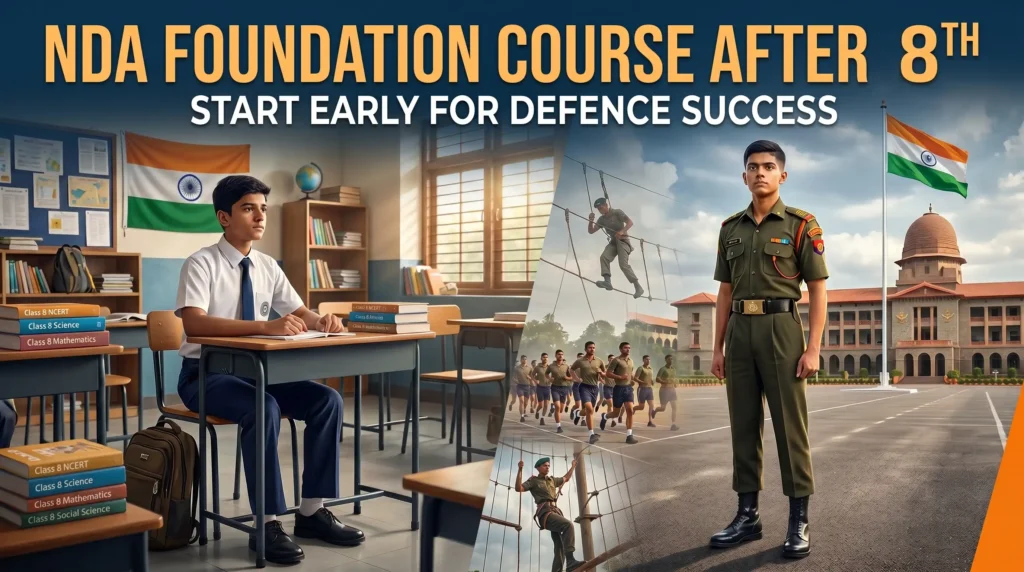
NDA Foundation After Class 10 in Pune: Why Early Preparation Matters for NDA 2027 & Beyond

For students who dream of becoming officers in the Indian Armed Forces, success in the National Defence Academy (NDA) examination is often the first major milestone. While many aspirants begin preparation after Class 12, experienced defence educators agree that starting early offers a significant advantage. This is why the demand for NDA Foundation After 10th programs has grown rapidly among students and parents. With increasing competition in NDA examinations, students who begin preparation during Classes 11 and 12 gain more time to strengthen academics, develop officer-like qualities, improve communication skills, and build physical fitness. In this guide, LWS Pune explains why early preparation can be the key to NDA success in 2027 and beyond. What is an NDA Foundation Program? An NDA Foundation Program is a structured preparation course designed specifically for students who have completed Class 10 and are entering Classes 11 and 12. These programs combine regular school academics with NDA-focused preparation, ensuring students are ready for both board examinations and the NDA selection process. Unlike short-term coaching programs, foundation courses focus on long-term development and provide students with sufficient time to build strong fundamentals. Integrated academic and NDA preparation. Long-term concept building. Physical fitness development. Leadership and personality enhancement. Preparation for NDA written examination and SSB interview. Why Start NDA Preparation After Class 10? One of the biggest advantages of joining an NDA Foundation After 10th program is the additional preparation time. Students can gradually master concepts instead of rushing through the syllabus during Class 12. More time to understand concepts thoroughly. Reduced academic pressure. Improved confidence and consistency. Better performance in board examinations. Stronger NDA exam readiness. Students who start early often develop better study habits and maintain a balanced approach toward academics and competitive exam preparation. Benefits of Joining an NDA Foundation Course in Pune Pune has become one of India’s leading destinations for defence education and NDA preparation. Joining a professional NDA Foundation Pune program offers students access to quality mentorship, structured learning, and a competitive environment. 1. Strong Academic Foundation The NDA examination tests Mathematics, English, Science, General Knowledge, and current affairs. Students who begin preparation after Class 10 can strengthen these subjects systematically. Better understanding of Mathematics. Improved English communication. Enhanced General Knowledge. Stronger problem-solving skills. 2. Better Board Examination Performance Contrary to common misconceptions, NDA preparation often helps students perform better academically because they develop discipline and stronger conceptual clarity. Improved concentration. Better study planning. Enhanced academic confidence. Stronger Class 11 and 12 performance. 3. Physical Fitness Development Physical fitness plays a crucial role in a defence career. Early training allows students to build stamina, endurance, and healthy habits gradually. Improved fitness levels. Enhanced stamina and endurance. Disciplined lifestyle. Better mental resilience. 4. Personality Development & Leadership Skills Future officers must possess leadership abilities, confidence, communication skills, and decision-making capabilities. Foundation programs focus on developing these qualities from an early stage. Public speaking practice. Leadership development activities. Group discussion exposure. Confidence-building exercises. 5. Early SSB Preparation The Services Selection Board (SSB) interview evaluates candidates beyond academics. Students who receive early exposure to officer-like qualities often perform better during the SSB process. Communication skills improvement. Officer-like qualities development. Group task exposure. Psychological readiness. What is an NDA Integrated Course? An NDA Integrated Course combines school education with NDA coaching under one structured program. Students prepare simultaneously for board examinations and NDA, eliminating the need to manage separate coaching schedules. This integrated approach helps students maintain balance while ensuring continuous progress toward their defence career goals. School academics and NDA preparation together. Structured daily routine. Reduced time management challenges. Continuous mentoring and monitoring. Who Should Join an NDA Foundation Program? Students who have completed Class 10. Aspirants targeting NDA 2027 and future NDA examinations. Students interested in Army, Navy, or Air Force careers. Parents seeking structured defence career guidance. Students aiming for long-term preparation. Common Mistakes Students Make Many aspirants lose valuable opportunities because they delay preparation or follow an unstructured approach. Starting preparation too late. Ignoring Mathematics fundamentals. Neglecting communication skills. Lack of physical fitness preparation. Inconsistent study schedules. No exposure to SSB requirements. Why Pune is a Great Choice for NDA Preparation? Pune has long been recognized as a defence education hub due to its military institutions, disciplined educational culture, and strong defence preparation ecosystem. Competitive learning environment. Access to experienced defence educators. Strong NDA preparation culture. Excellent academic infrastructure. Exposure to defence-oriented training. Why Choose LWS Pune for NDA Foundation After 10th? LWS Pune is committed to helping students build a strong foundation for successful defence careers. Our specialized NDA Foundation Pune programs are designed to develop academic excellence, leadership qualities, and officer-like personality traits from an early stage. Dedicated NDA Foundation Programs. NDA Integrated Schooling Support. Experienced Defence Faculty. Live Online and Classroom Learning. Regular Mock Tests and Assessments. Personality Development Sessions. SSB Foundation Training. Physical Fitness Guidance. Personalized Mentorship and Progress Tracking. Whether your goal is NDA 2027 or future officer-entry opportunities, LWS Pune provides the guidance, structure, and support necessary for long-term success. Conclusion Joining an NDA Foundation After 10th program is one of the smartest investments students can make toward their defence career aspirations. Early preparation provides sufficient time to strengthen academics, improve physical fitness, develop leadership skills, and prepare confidently for NDA and SSB selection processes. If your dream is to serve the nation as an officer in the Indian Armed Forces, now is the ideal time to begin your journey. With expert mentorship, integrated learning, and structured preparation programs, LWS Pune helps students transform their ambitions into achievements and prepare effectively for NDA 2027 and beyond.

Scroll to Top